In brief
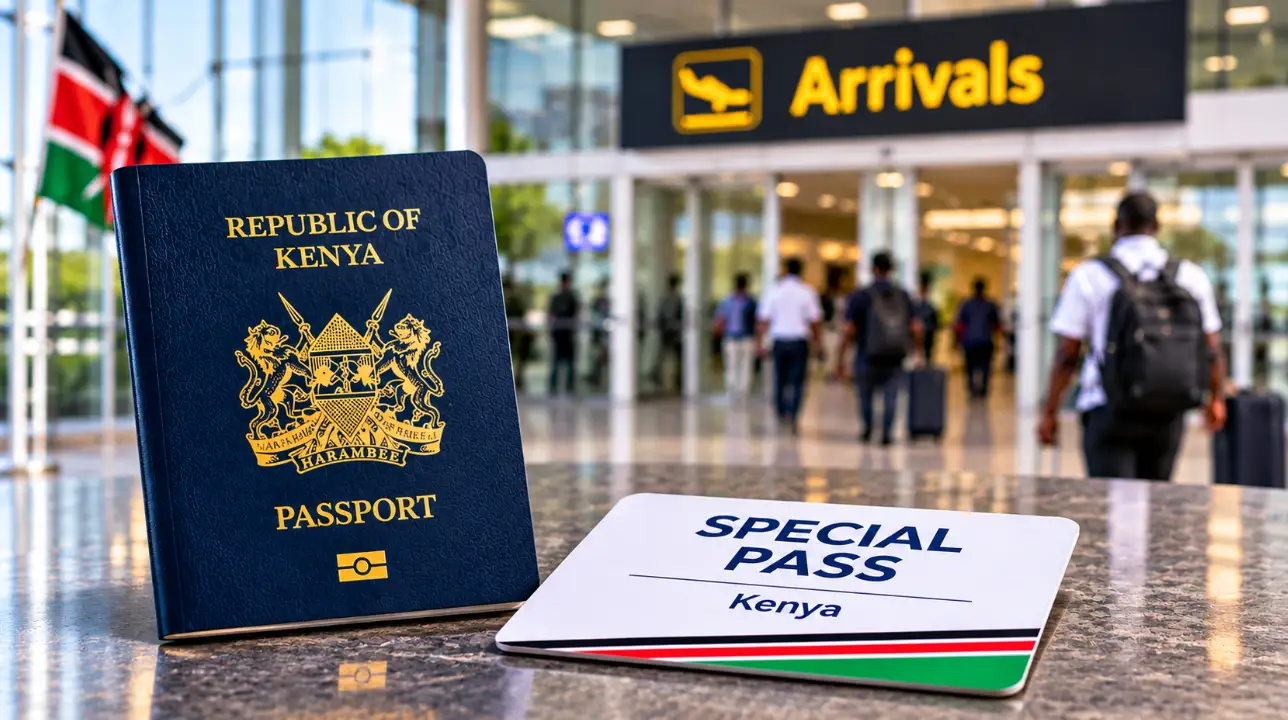
- The special pass is Kenya’s short-term work authorisation, issued under regulation 34 of the 2012 Regulations for up to three months at a time and capped at six months in total, a ceiling the Directorate does not extend. It costs USD 200 (about KES 26,000) a month for non-EAC nationals and nothing for EAC citizens.
- It lawfully covers two situations, the defined short assignment, a consultancy, a commissioning, a training engagement, and the bridge between arrival and an approved work permit, and it covers exactly what the application described, nothing wider.
- The traps are predictable. Working on an eTA while the papers process, stretching the pass past its ceiling with nothing filed behind it, and treating a pass for one assignment as a licence for a whole role, each ends in fines, removal and an employer sharing the offence.
Full Article
No document in Kenyan immigration is used more, or understood less, than the special pass. It is the workhorse that lets a specialist fly in for a defined piece of work, and the lawful bridge that lets a new hire start while the Class D application runs, and because it issues in weeks rather than months it has acquired a reputation as the easy route, which is where the misuse begins. The pass is short by design, narrow by design and terminal by design, and the people who treat it as a small work permit discover each of those qualities at the worst available moment. This article states what the special pass is, the two things it lawfully does, the several things it is routinely and unlawfully made to do, and the discipline that keeps a company and its foreign specialist on the right side of a line the Directorate of Immigration Services polices with increasing attention. It sits beside our guide to work permits and special passes in Kenya and our article on what a Kenyan work permit actually costs.
What a special pass is
The special pass is issued under regulation 34 of the Kenya Citizenship and Immigration Regulations, 2012 as a short-term authorisation to engage in the specific activity the application describes. It runs for up to three months initially, can be renewed within a statutory ceiling of six months in total, and at that ceiling it ends, because the Directorate treats six months as the outer limit of short-term and does not entertain further extensions. The application is filed on the eFNS portal using Form 32, with a detailed cover letter describing the assignment, the sponsor’s registration documents, the applicant’s certified academic and professional certificates, regulatory clearance where the profession requires it, and confirmation of current immigration status where the applicant is already in Kenya. The fee is USD 200 (about KES 26,000) for each month approved for non-EAC nationals, payable on approval, while citizens of the East African Community receive the pass free of charge, and a clean application typically issues in two to six weeks, which is precisely why the pass exists.
What it lawfully covers
Used properly, the pass does two jobs. The first is the defined assignment, the engineer commissioning a plant, the consultant delivering a scoped project, the trainer running a programme, the auditor on a group assignment, work with a beginning, an end and a description, and the pass covers that work for that sponsor and nothing else. The second is the bridge, and it is the use every employer should know by heart. An employee or investor whose substantive application is pending starts lawfully on a special pass rather than waiting abroad or, worse, working on visitor status, and the pass carries them until the Class D or Class G permit issues, the sequence our articles on hiring a foreigner under Class D and on the Class G investor permit both assume. In each case the scope is set by the application, so the cover letter is not a formality but the boundary of what the holder may lawfully do, and a sponsor who wants the specialist to do more than the letter described needs a fresh application, not a broad reading.
What it does not cover
The misuses are as standard as the uses. The pass is not a small work permit, so an ongoing role dressed as a series of short assignments is a Class D case being evaded, and the Directorate reads repeat applications for the same person, or the same role under rotating sponsors, exactly as what they are. It is not extendable past six months, however incomplete the project, so the specialist whose assignment overruns needs a substantive permit, planned for before the ceiling arrives rather than argued about at it. It is not convertible, since there is no mechanism that turns a pass into a permit, only a separate permit application that should have been filed in parallel. It does not cover the family, who need dependant’s passes in their own right. And beneath all of it sits the misuse that is not a special pass problem at all, the person working on an eTA or tourist entry while the paperwork is said to be processing, which is simply working without authorisation, with fines and removal for the individual and the offence of employing an unauthorised foreigner waiting for the sponsor.
Using it properly
The discipline that keeps the pass lawful is sequencing, and it fits in three sentences. File the substantive permit application and the special pass together, or in immediate sequence, so the bridge leads somewhere and the six months are never under pressure. Diary the ceiling backwards, because a Class D decision realistically takes four to eight weeks, so a substantive application not filed by the pass’s third month is a problem being scheduled. And keep pass holders on the same foreign-staff register as permit holders, with their expiry dates and the scope of their assignments recorded, so the business always knows who may do what and until when. Sponsors who follow the three sentences use the special pass as the law intends, as the instrument that makes lawful speed possible, and never meet its sharp edges.
What happens next
For a business planning a short foreign assignment or a bridged start, the decision that matters is made before anyone boards a plane, the right class identified and the applications sequenced, and our guide to work permits and special passes in Kenya walks that choice. To have an assignment scoped, a pass obtained and the substantive application filed behind it, the place to start is a conversation.
Frequently asked questions
How long does a special pass last in Kenya?
Up to three months when first issued, renewable within a hard ceiling of six months in total. The Directorate does not extend beyond six months, so longer work needs a substantive permit filed in good time.
How much does a special pass cost?
USD 200 (about KES 26,000) for each month approved for non-EAC nationals, paid on approval, with a KES processing component payable on filing. Citizens of EAC states, the Democratic Republic of the Congo included, receive the pass free of charge.
Can a special pass be converted into a work permit?
No. There is no conversion, only a separate permit application in its own right. The pass simply keeps the holder lawful while the substantive application runs, which is why the two are best filed together.
Can I work on an eTA or tourist entry while my permit is processing?
No. The eTA and visitor entry authorise visits only, and working on either is working without authorisation, with fines and removal for the individual and an offence for the employer. The lawful way to start before approval is the special pass.
What happens when the six months run out?
The authorisation ends, whatever the state of the project. A holder with a pending permit application may have options worth advice, but a holder with nothing filed is unlawful from that day, so the substantive application belongs on file by the pass’s third month at the latest.
Peter Maina is a Partner of Peter Maina & Company Advocates. This article states the law as at 5 November 2026. It is general information, not legal advice. To scope an assignment, obtain a special pass or sequence it with a permit application, reach out on e-mail peter@pmlaw.co.ke or WhatsApp +254 714 644 080.
Leave a Reply